Est. 2019 · A Collector's Archive
Every doll was held
by someone who
loved it first.
A quiet archive for those who understand that a hairline crack is not damage — it is a record of time.
"Patience over flipping. Knowledge over speculation."
Join the Collector's Table→A declaration, not a catalogue.
Three principles that govern how we read, write, and talk about these objects in this corner of the internet.
Patience over flipping.
The collector who waits three years to find the right Kestner mold — the one with the original sleep eyes, the unrestored wig, the faint factory-applied blush still in the cheek hollows — understands something the reseller never will. Acquisition is not the point. The search is the point. The slow accumulation of context, of comparison, of knowing what you're looking at when it finally appears on a folding table between a box of Reader's Digest and someone's grandmother's embroidery hoop. We are not here to move inventory. We are here to understand what we hold.
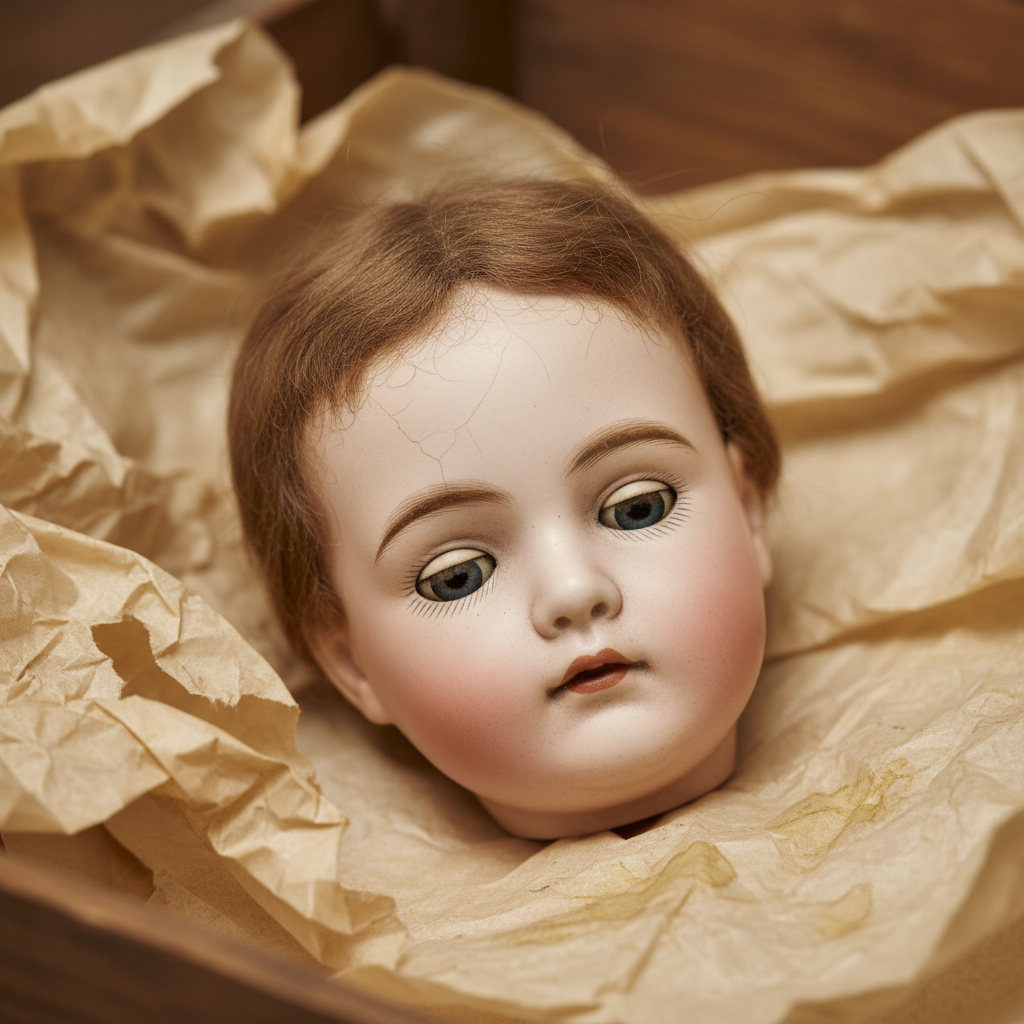
Kestner 171, c. 1895. Original sleep eyes, factory blush intact.
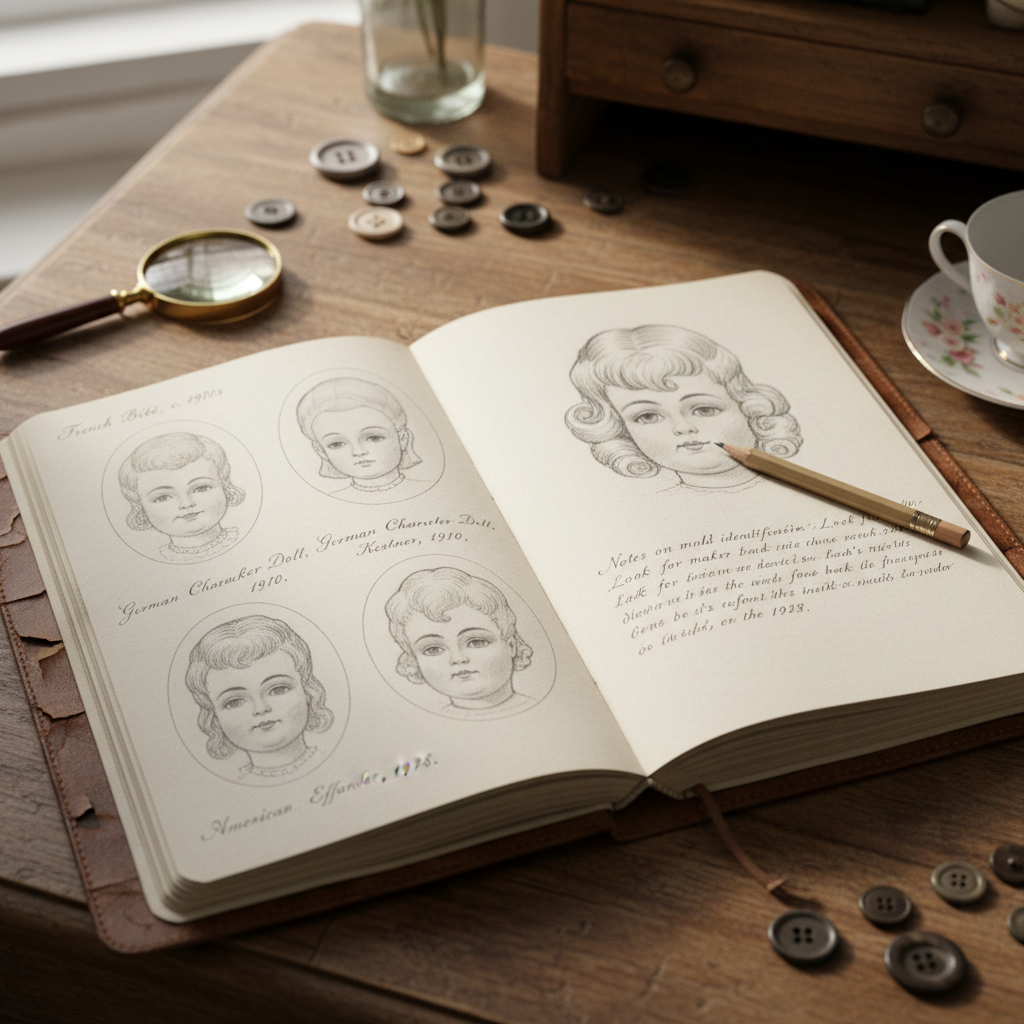
A collector's identification notebook, forty years of fieldwork.
Knowledge over speculation.
A doll without a story is an object. A doll with its provenance — the estate it came from, the child who owned it, the seamstress who made its replacement dress in 1942 — is evidence. Evidence of how people lived, what they valued, who they gave things to and why. The identification work we do here is not about establishing price. It is about establishing place: where this object belongs in the long record of how human beings have made small likenesses of themselves and handed them to their children as a kind of promise.
Preservation over display.
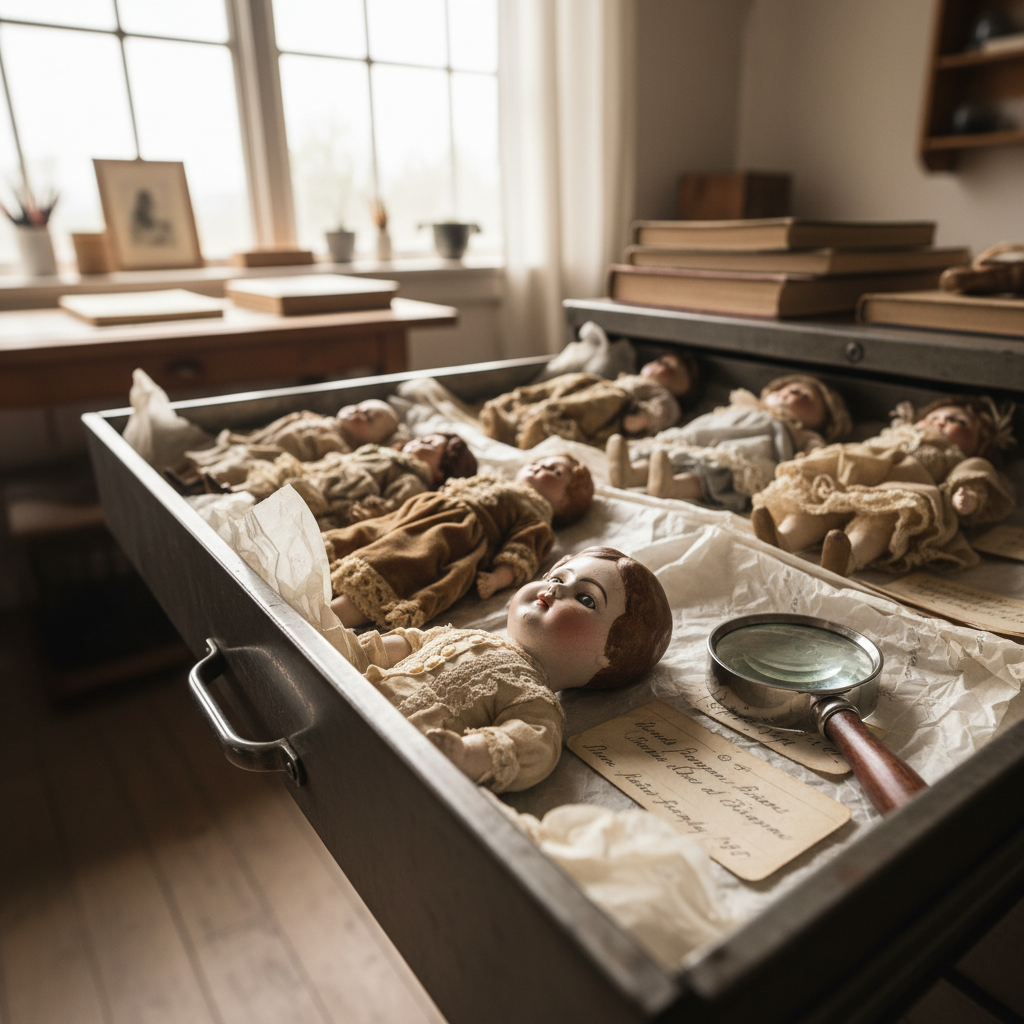
The cabinet is not the destination. Acid-free tissue is not an affectation — it is a commitment to the next person who will hold this doll after you are gone. Every collector is a temporary custodian. The hairline crack was there when you found it; your job is to ensure it is still only a hairline crack when you pass it on. We keep records. We photograph in natural light. We note every intervention, every repair, every replaced part. We are not curators in the institutional sense, but we hold ourselves to the same standard: leave it better understood than you found it.
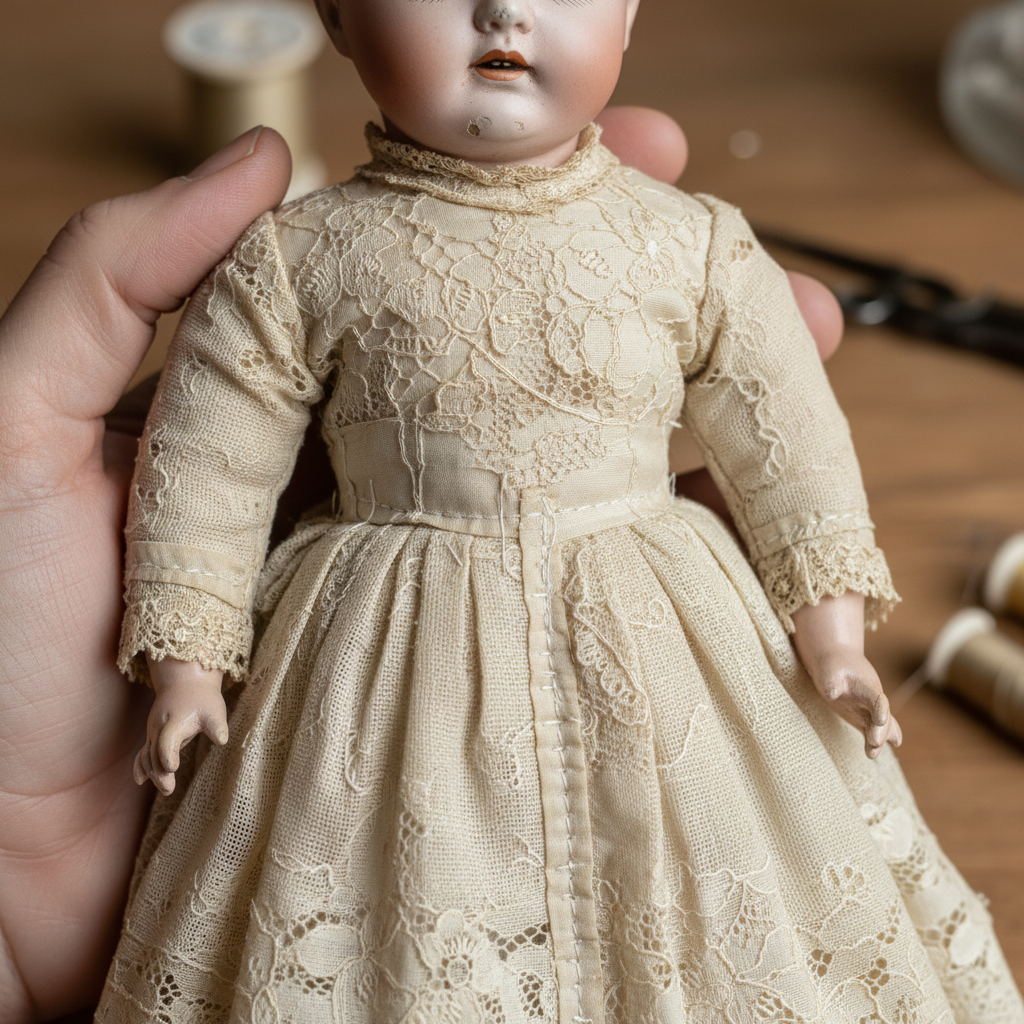
Hand-stitched replacement dress, period-correct cotton lawn, 2019.
Three pieces worth your time.
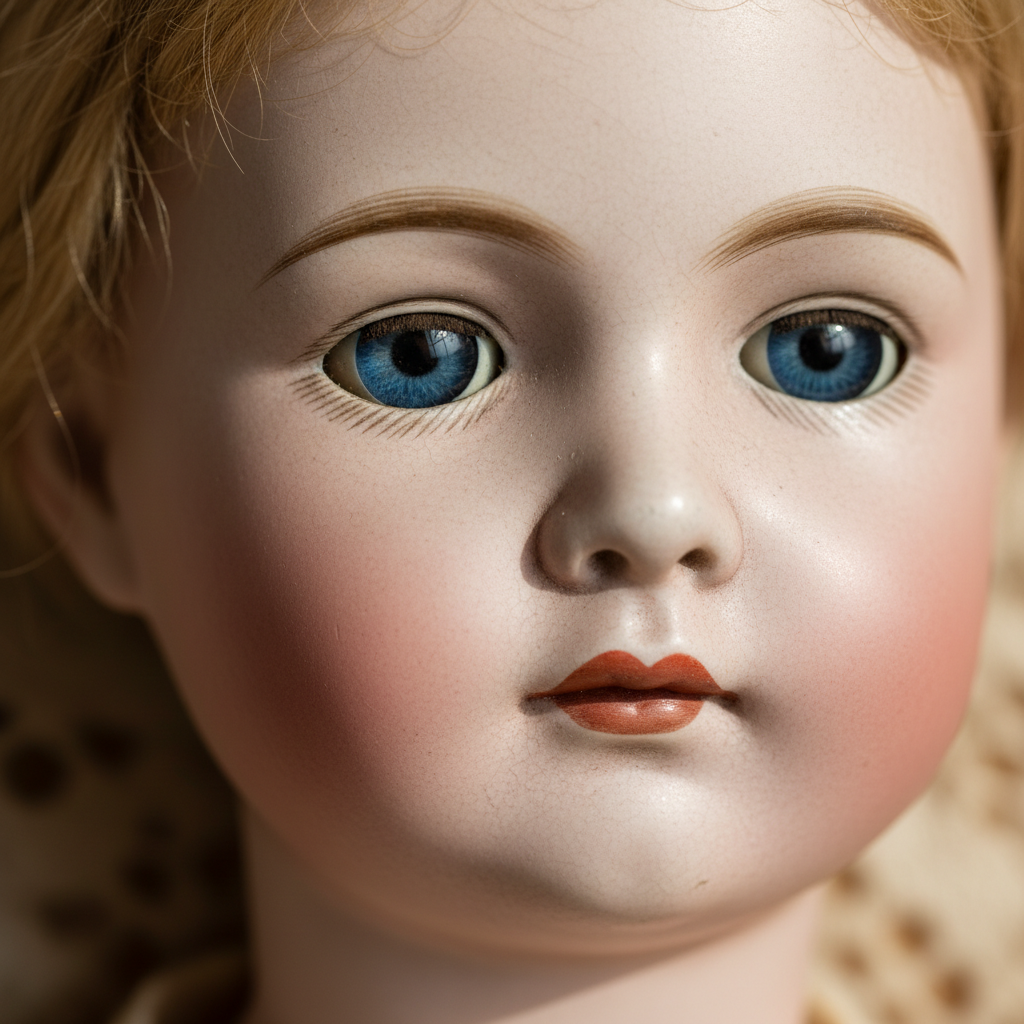
Reading the Mark: How to Date a Jumeau Bébé Without the Box
The pressed bisque of the early Jumeau period has a particular weight to it — dense in the hand in a way the later poured pieces never quite replicated. Before you look at the mold number, feel the forehead. If it has that specific cold density, you are holding something made before 1890, and the rest of the identification follows from there.
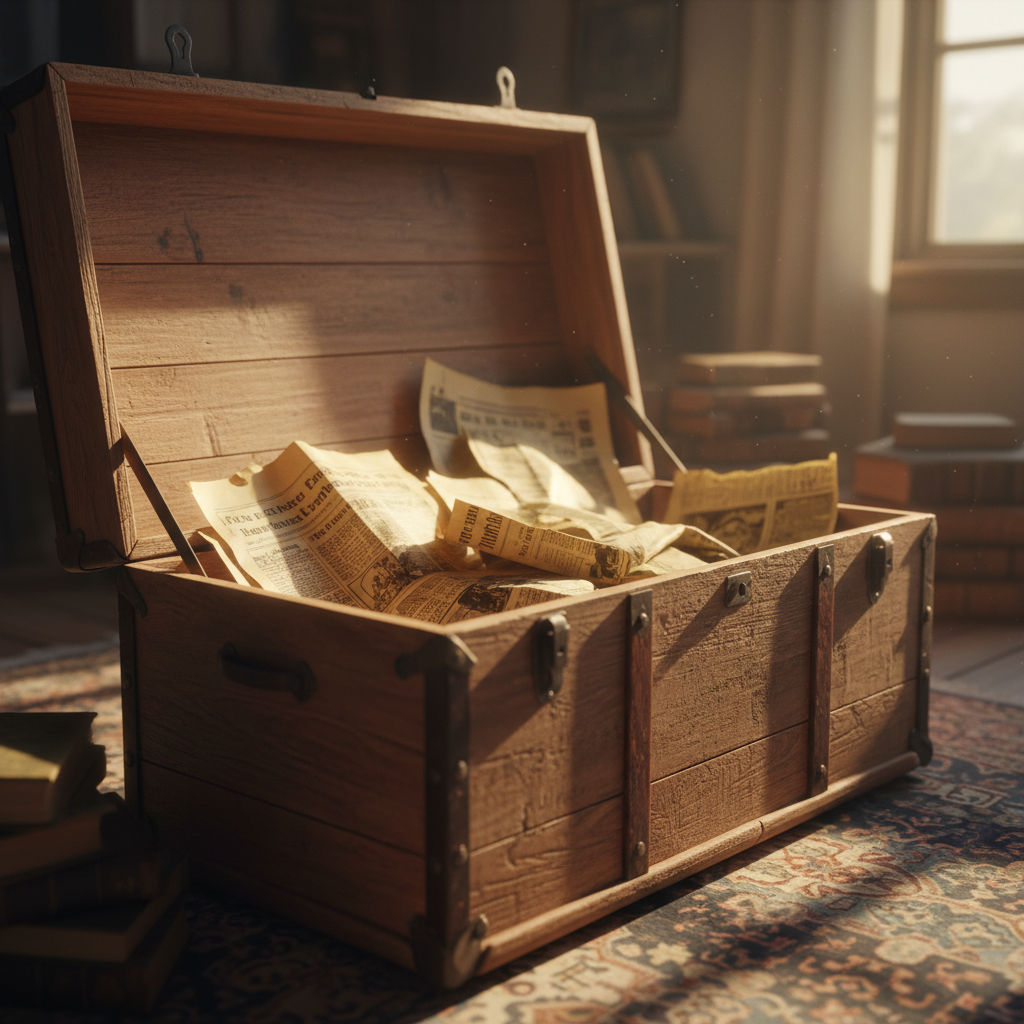
The Trunk from Harrisburg: Identifying Forty-Three Unmarked German Dolls
When Margaret Okafor emailed in October with photographs of what she had inherited — a cedar-lined steamer trunk, forty-three heads wrapped in 1940s newspaper, no marks visible on any of them — the first thing I told her was: do not clean anything yet. The grime is information. The newspaper is a date. The cedar smell is a clue about storage conditions, which tells you something about the family that kept them.
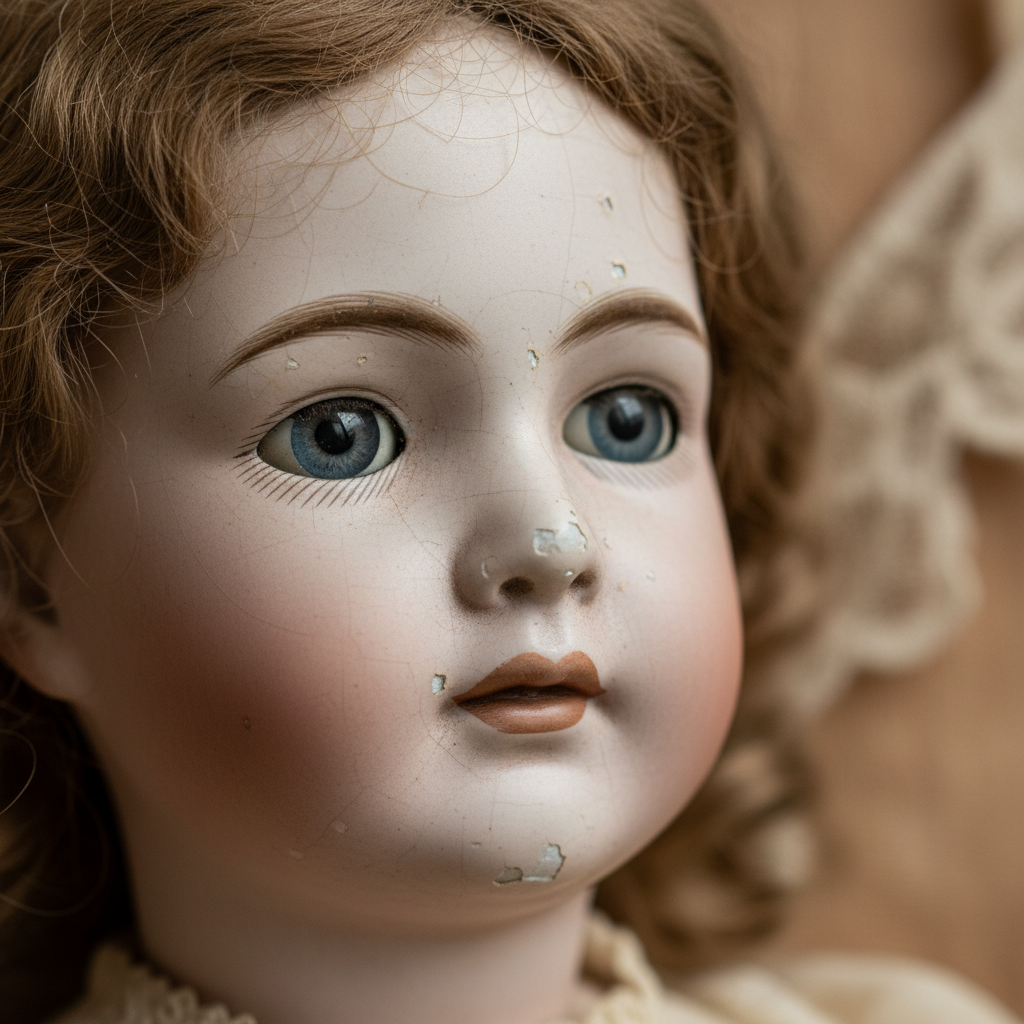
Against Repainting: A Defense of the Worn Face
Every few months someone asks me whether they should have a doll's face professionally repainted. The bisque has worn at the cheek where a child's thumb rubbed it for years. The lip color is faded. The brow lines are thin. And I give the same answer every time: the wear is the biography. A Madame Alexander with factory-perfect coloring and a Madame Alexander with fifty years of gentle handling are not the same object. One is a specimen. The other is evidence of a life.
"Forty years of field notes, now searchable."
Enter the Archive →